Institutional Crypto Adoption: Market Impact & Future Trends
TL;DR: Key Takeaways
- Market Maturation: In 2026, institutional crypto adoption has shifted from speculative testing to “production-grade” integration into global finance.
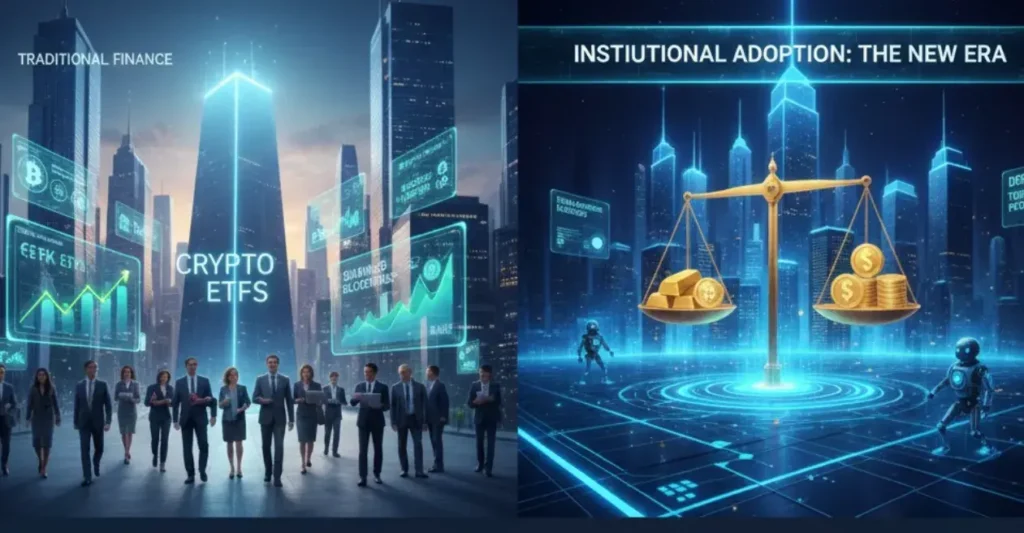
- The ETF Flywheel: Spot crypto ETFs for Bitcoin, Ethereum, and now Solana and XRP are providing regulated, high-liquidity gateways for pension and sovereign wealth funds.
- Banking Shift: Major banks adopting blockchain are no longer just experimenting; they are moving trillions in settlement volume via tokenized deposits and stablecoins.
- RWA Dominance: The tokenization of Real-World Assets (RWA), such as U.S. Treasuries, has become a multi-billion dollar sector, offering institutional-grade yield on-chain.
Introduction: The Great Institutional Convergence
The year 2026 marks a definitive turning point in the history of digital assets. We have officially moved past the “Will they or won’t they?” phase of institutional interest. Today, the question for the world’s largest asset managers is no longer about the validity of the technology, but rather how quickly they can integrate it into their core operations.
Institutional crypto adoption has evolved into a structural force. This convergence between decentralized ledger technology and traditional finance crypto initiatives is creating a more liquid, 24/7 financial system. As we look at the market impact and future trends, it’s clear that the “institutionalization” of crypto is providing the stability and regulatory cover necessary for the next wave of global wealth to enter the ecosystem.
The ETF Flywheel: Beyond Bitcoin and Ethereum
If 2024 was the year of the Bitcoin ETF, 2026 is the year of the “Diversified Digital Asset Suite.” The success of the initial spot products created a blueprint that has now been applied to a broader range of assets.
Scaling AUM and New Asset Classes
In early 2026, global crypto ETFs and ETPs have surpassed $400 billion in Assets Under Management (AUM). While Bitcoin remains the primary allocation, we are seeing significant inflows into Ethereum, Solana, and XRP-linked products. The SEC’s introduction of generic listing standards in late 2025 removed the need for individual filings for every new asset, effectively opening the floodgates for “altcoin” ETFs.
Impact on Market Volatility
A major result of this institutional crypto adoption trend is the dampening of extreme volatility. Institutional investors tend to have longer time horizons and employ sophisticated hedging strategies. As ETFs absorb a larger percentage of the circulating supply, the “floor” for major assets has risen, making the market more predictable for retail and institutional participants alike.
Banks Adopting Blockchain: From Pilot to Production
Perhaps the most “quiet” but impactful trend of 2026 is the way global banks adopting blockchain are reshaping back-end financial plumbing.
Tokenized Deposits and Settlement Rails
Leading institutions like JPMorgan, Goldman Sachs, and Lloyds Banking Group have moved their “tokenized deposit” projects into full production. These banks are using private and hybrid blockchains to settle interbank transfers instantly, bypassing the delays of the traditional correspondent banking system. This use of traditional finance crypto infrastructure has reduced cross-border settlement times from days to seconds.
The Role of Stablecoins in Treasury Management
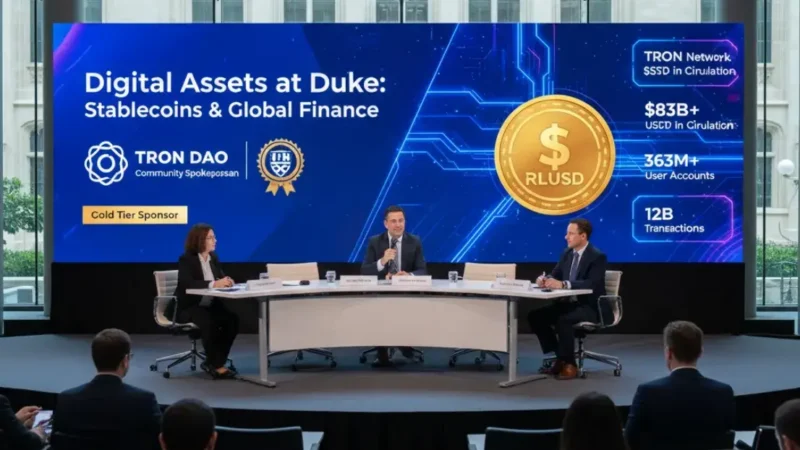
By 2026, regulated stablecoins like USDC and Ripple’s RLUSD have become standard tools for corporate treasury departments. Institutions use these digital dollars to manage liquidity across global subsidiaries without the friction of currency conversion or “banking hours.” This level of institutional crypto adoption in payments is projected to see stablecoin transaction volumes exceed $30 trillion annually by the end of the year.
Real-World Assets (RWA): The New Yield Frontier
One cannot discuss institutional crypto adoption in 2026 without mentioning the explosion of Real-World Asset tokenization.
On-Chain Treasuries and Private Credit
Investment firms are now tokenizing everything from U.S. Treasury bills to private equity funds. This allows an institution in Singapore to buy a fractionalized share of a U.S.-based debt fund with the click of a button. The total value locked (TVL) in tokenized RWAs has grown over 400% in the last year, driven by the desire for transparent, programmable yield.
The Liquidity “Super-App”
We are seeing the emergence of institutional dashboards that combine traditional brokerage accounts with DeFi-style lending and borrowing. These platforms allow a fund manager to use their tokenized bond holdings as collateral to borrow stablecoins for a quick trade—all within a single, compliant interface.
Future Trends: What’s Next for Institutional Crypto?
As we look toward 2027, several emerging trends will continue to drive institutional crypto adoption.
- Agentic Finance: The rise of autonomous AI agents that can hold wallets and execute trades is beginning to take shape. Institutions are exploring how these “machine-driven” participants will impact liquidity and order book depth.
- National Reserves: Following the lead of smaller nations, several G20 countries are reportedly exploring “Strategic Bitcoin Reserves” as a hedge against sovereign debt volatility and currency debasement.
- DeFi Balance Sheets: Institutional-grade DeFi protocols with built-in KYC/AML features are attracting “Wholesale DeFi” activity. This move toward traditional finance crypto integration ensures that the efficiency of DeFi is paired with the security of regulated finance.
Stay informed, read the latest crypto news in real time!
Conclusion: A New Foundation for Global Finance
Institutional crypto adoption has permanently altered the DNA of the financial markets. In 2026, we are no longer looking at crypto as an “alternative” asset class, but as the essential infrastructure for the future of money.
The combination of crypto ETFs, banks adopting blockchain, and the rise of tokenized assets has created a resilient, transparent, and highly efficient market. For investors, the takeaway is simple: the institutional era is here, and it is providing the foundation for the most significant transformation of finance since the arrival of the internet.