
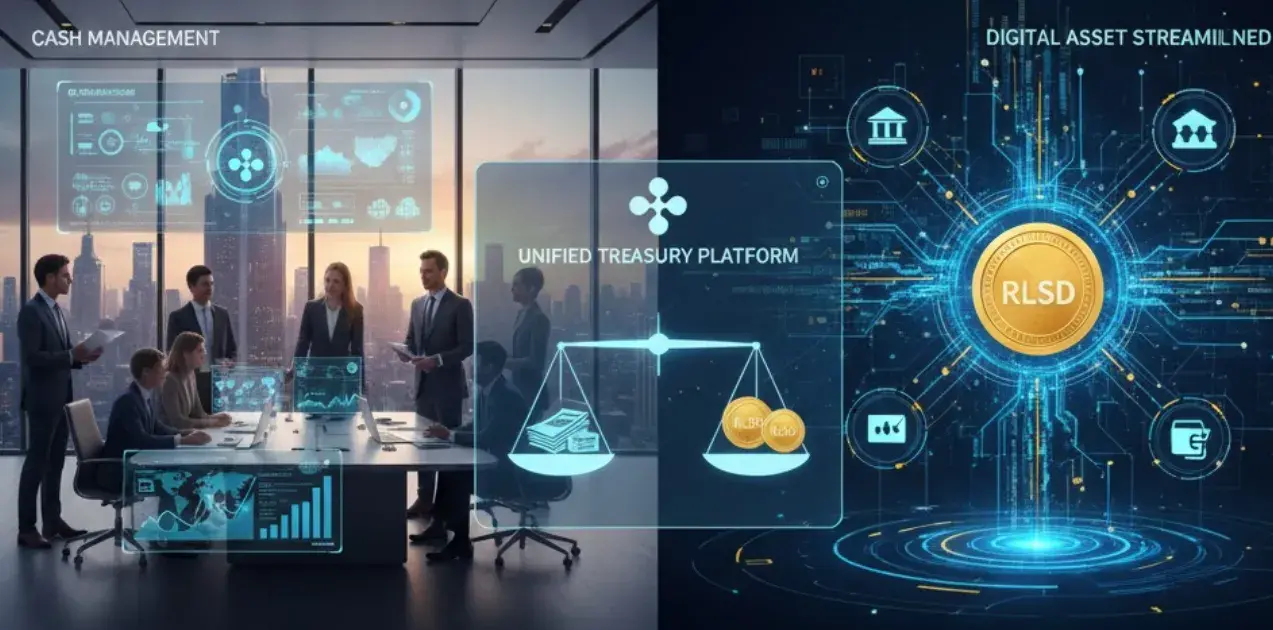
TL;DR: Key Takeaways
- The News: Ripple is launching a sophisticated treasury platform designed to unify traditional cash management with digital asset operations.
- RLUSD Integration: The initiative places Ripple’s USD-pegged stablecoin (RLUSD) at the center of enterprise liquidity.
- Banking Impact: Global banks are being prompted to overhaul legacy systems to match the speed and transparency of blockchain-native treasury tools.
- Efficiency Gains: The platform aims to eliminate fragmented silos, offering real-time visibility and 24/7 settlement capabilities for global corporations.
Introduction: The Convergence of Traditional Finance and Blockchain
For decades, corporate treasury management has been a game of fragmentation. Large enterprises often find their liquidity trapped across multiple jurisdictions, various currencies, and disconnected banking portals. As we move further into 2026, the demand for a more cohesive financial architecture has never been higher.
CRYPTOCAP:TOTAL3 Real-Time Chart
Ripple, a long-standing leader in blockchain-based cross-border payments, is now taking a monumental step into the heart of corporate finance. By introducing a dedicated treasury platform, Ripple is not just facilitating payments; it is providing the infrastructure for companies to manage their entire financial lifecycle—combining traditional fiat with the burgeoning world of digital assets.
The Vision: A Unified Treasury Platform for 2026
The primary challenge for modern CFOs is “visibility.” Knowing exactly where your capital is at any given second is often impossible with legacy systems that rely on T+2 settlement cycles. Ripple’s new treasury platform addresses this by creating a single “pane of glass” through which a corporation can view its cash, stablecoin reserves, and other digital holdings.
 SEC Warns Investors About Investment Scams During World Investor Week→
 Coinbase and Citi Expand Stablecoin Payments for Businesses→
 Michael Saylor Proposes a Bill of Digital Rights to Fuel a $100 Trillion Digital Economy→
 BlackRock: AI Will Drive a New Machine-Native Economy→
Breaking Down the Silos
Historically, a company might use one system for its USD accounts, another for its EUR holdings, and a separate, manual process for its crypto experiments. Ripple’s initiative seeks to merge these into a streamlined environment. This unified treasury platform allows for the seamless movement of value between different asset classes, ensuring that capital is never sitting idle when it could be earning yield or settling a debt.
Real-Time Liquidity Management
In the fast-paced digital economy, liquidity is oxygen. The ability to move funds instantly, regardless of time zones or bank holidays, is a competitive advantage. By leveraging the XRP Ledger and Ripple’s private sidechains, this treasury platform enables 24/7 liquidity management, reducing the need for companies to maintain expensive “buffer” capital in stagnant accounts.
RLUSD: The Engine of Enterprise Operations
Central to this new financial ecosystem is RLUSD, Ripple’s regulated, USD-pegged stablecoin. While XRP remains a powerful bridge asset for high-speed transfers, RLUSD provides the stability that corporate accountants require for balance sheet reporting and day-to-day operations.
Why RLUSD Matters for Treasurers
For a treasury platform to be successful in a corporate setting, it must minimize volatility. RLUSD offers the benefits of blockchain—speed, transparency, and programmability—without the price fluctuations of traditional cryptocurrencies. Within the Ripple ecosystem, RLUSD acts as a “digital dollar” that can be used for payroll, vendor payments, and inter-company transfers.
Compliance and Trust
In 2026, regulation is the name of the game. Ripple has ensured that RLUSD and the accompanying treasury platform meet the highest standards of global compliance. By providing audited reserves and adhering to strict KYC/AML protocols, Ripple is giving enterprises the confidence to move their “real money” onto the blockchain.
Prompting a Global Banking Shift
Ripple’s expansion into corporate finance isn’t just a win for companies; it’s a wake-up call for the global banking sector. For years, banks have enjoyed a monopoly on treasury services, but their reliance on aging infrastructure like SWIFT has left them vulnerable to disruption.
Rethinking Treasury Efficiency
As more corporations adopt Ripple’s treasury platform, banks are being forced to rethink their own service offerings. It is no longer enough to offer a basic web portal for wire transfers. To remain relevant, banks must now consider how they integrate with decentralized ledgers and stablecoin issuers. We are seeing a shift where banks are evolving from simple custodians to active participants in a multi-asset digital economy.
Collaborative Innovation
Rather than viewing Ripple as a direct competitor, many forward-thinking banks are looking for ways to partner. By integrating with a blockchain-native treasury platform, banks can offer their corporate clients faster settlement times and lower fees while maintaining their role as trusted advisors.
The Strategic Benefits of Digital Treasury Tools
Why should a Fortune 500 company switch to a blockchain-based treasury platform? The benefits extend far beyond just “being modern.”
1. Cost Reduction
Traditional cross-border treasury operations are riddled with intermediary bank fees and FX markups. By utilizing RLUSD and direct ledger-to-ledger transfers, companies can bypass these “toll booths,” saving millions in annual operational costs.
2. Programmable Finance
One of the most exciting aspects of a digital treasury platform is the ability to use smart contracts. A treasurer could program the system to automatically move funds into a high-yield account the moment a certain balance is reached, or to trigger vendor payments only when specific shipping milestones are met.
3. Enhanced Security
Legacy banking systems are often targets for social engineering and fraud. Blockchain-based systems provide an immutable audit trail. Every transaction on the Ripple treasury platform is recorded on-chain, making it nearly impossible to alter records or engage in “invisible” fraudulent activity.
Challenges and the Path Forward
Despite the clear advantages, the transition to a unified treasury platform is not without its hurdles. Integration with existing ERP (Enterprise Resource Planning) systems like SAP or Oracle remains a complex task. Furthermore, corporate tax departments must adapt to the nuances of digital asset accounting.
However, the momentum is undeniable. As of 2026, the “proof of concept” phase is over. Companies are no longer asking if they should use blockchain for treasury; they are asking which platform offers the most robust security and the best liquidity.
Conclusion: The Future is Converged
Ripple’s entry into the treasury space marks a turning point for the industry. By unifying cash and digital assets, they are solving the fragmentation problem that has plagued corporate finance for decades. The launch of the Ripple treasury platform, powered by the stability of RLUSD, offers a glimpse into a future where money moves as fast as information.
CRYPTOCAP:TOTAL Real-Time Chart
For banks and corporations alike, the message is clear: the era of siloed finance is ending. Those who embrace a unified, digital-first approach to liquidity will lead the next decade of global commerce.