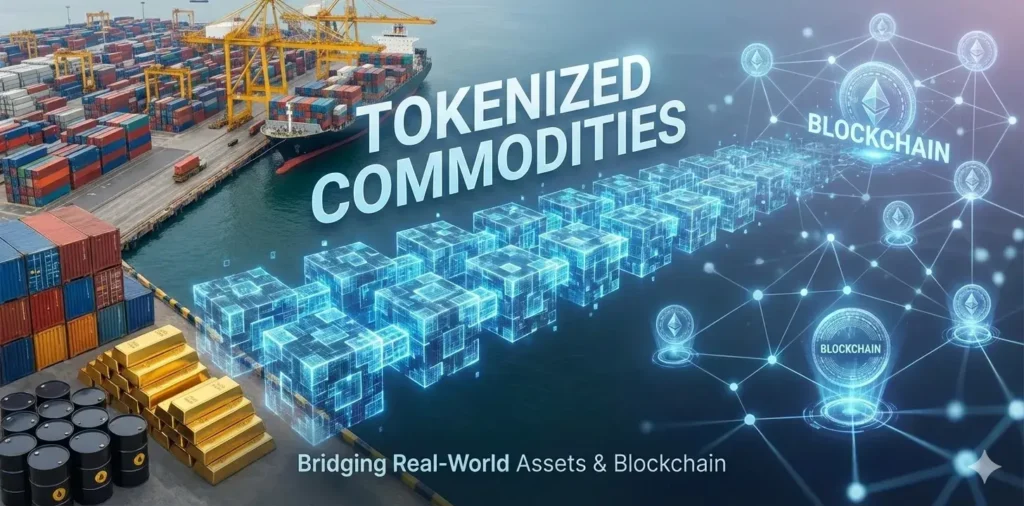
Tokenized Commodities: Bridging the Gap Between Real-World Assets and Blockchain
TL;DR (Key Points)
- Market Expansion: The market for tokenized commodities has surged in 2025, with precious metals leading the transition to blockchain.
- Gold Dominance: Products like PAX Gold (PAXG) and Tether Gold (XAUT) now command a multi-billion dollar market cap as gold prices hit record highs.
- Operational Efficiency: Blockchain infrastructure allows for instant, 24/7 settlement, bypassing the restrictive hours of traditional regulated markets.
- Institutional Adoption: Major financial players and regulators (including the SEC) are increasingly supporting onchain asset frameworks.
- Fractional Ownership: Retail investors can now access institutional-grade assets, such as gold bars or oil reserves, with minimal capital.
The global financial landscape in late 2025 is defined by a singular, powerful trend: the migration of value from legacy databases to decentralized ledgers. As traditional markets grapple with geopolitical volatility and high inflation, investors are seeking refuge in “hard” assets. However, the method of access has changed. No longer confined to the cumbersome world of physical storage or paper-heavy ETFs, the market for tokenized commodities has emerged as a cornerstone of the modern digital economy.
This shift is not merely a technological upgrade; it is a fundamental rewiring of how we perceive ownership and liquidity. By bringing real-world assets (RWA) onto blockchain networks, the industry is resolving centuries-old frictions related to settlement, transparency, and accessibility.
The Rise of the RWA Ecosystem
For decades, the commodities market was the playground of institutional giants and specialized brokers. For a retail investor, owning physical gold or exposure to crude oil meant navigating a maze of intermediaries, high fees, and limited trading windows. The introduction of tokenized commodities has effectively democratized this space.
In 2025, the total value of assets tokenized on-chain has crossed the $30 billion mark. While U.S. Treasuries initially led this growth, commodities—led by precious metals—have become the fastest-growing sub-sector. The reason is simple: commodities provide a tangible “anchor” of value in an increasingly digital world. When an ounce of gold is represented by a digital token, it retains its intrinsic value while gaining the “superpowers” of blockchain technology—namely, divisibility, portability, and 24/7 transferability.
How the Tokenization Lifecycle Works
The process of creating tokenized commodities is a sophisticated blend of physical security and cryptographic verification. It requires a “trust stack” that involves multiple parties ensuring that the digital token is always a perfect reflection of the physical reality.
The lifecycle typically follows these steps:
- Acquisition and Vaulting: A regulated issuer purchases physical commodities (e.g., London Good Delivery gold bars) and stores them in high-security, insured vaults.
- Auditing: Independent third-party firms conduct regular audits to verify that the physical inventory matches the digital record.
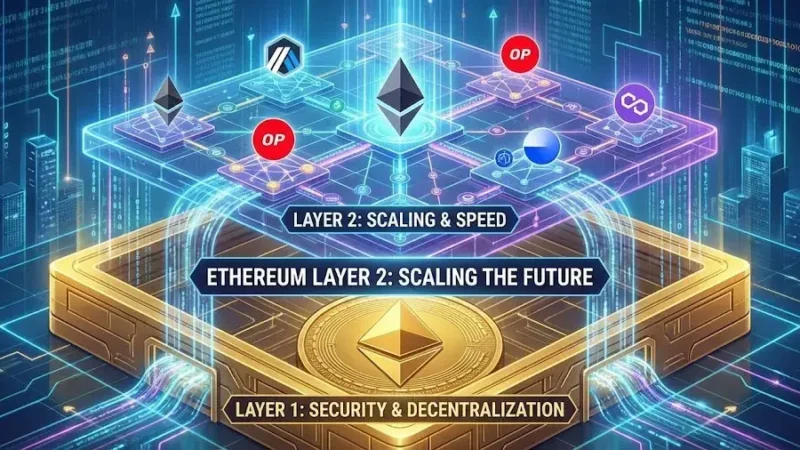
- Minting: Using a smart contract, the issuer mints tokens on a blockchain (such as Ethereum or Avalanche). Each token represents a specific weight or unit of the commodity.
- Trading and Settlement: Users buy, sell, or trade these tokens. Unlike traditional markets, these transactions settle in seconds, not days.
- Redemption: Most reputable issuers allow holders to burn their tokens in exchange for the underlying physical asset, provided they meet minimum quantity requirements.
The Gold Standard of Digital Finance
As gold prices have climbed past $3,600 per ounce this year, the demand for gold-backed tokens has reached a fever pitch. Gold is the perfect entry point for tokenized commodities because it is universally recognized, highly liquid, and culturally understood as a store of value.
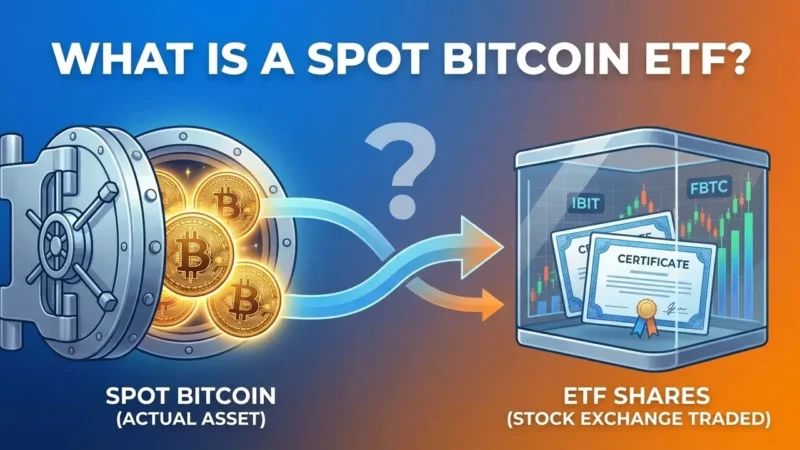
Leading protocols like Paxos (PAXG) and Tether (XAUT) have seen their market caps swell. These assets offer a significant advantage over traditional Gold ETFs (Exchange-Traded Funds). While an ETF represents a share in a fund that owns gold, a token often represents direct ownership of a specific, identifiable gold bar. Furthermore, while ETFs only trade during stock exchange hours, gold tokens can be swapped at 3:00 AM on a Sunday, providing investors with unparalleled agility during market-moving global events.
Beyond Gold: The Expansion into Silver and Energy
While gold remains the king, 2025 has seen a surge in other tokenized commodities. Silver tokens, such as Kinesis Silver (KAG), have outperformed even Bitcoin in certain volatility windows this year, serving as a high-beta alternative for safe-haven seekers.
We are also seeing the first successful implementations of tokenized energy and agriculture. In these sectors, tokens represent “offtake agreements” or stored reserves of oil, lithium, and even wheat. For industrial players, this allows for more efficient supply chain management and hedging. For investors, it offers a way to speculate on industrial growth without managing the logistics of physical delivery.
Breaking the Chains of Regulated Market Hours
One of the most profound benefits of tokenized commodities is the elimination of the “market close.” Traditional commodity markets operate on a schedule that feels increasingly archaic in a globalized, 24-hour economy. When a geopolitical crisis strikes over a weekend, traditional investors are frozen, unable to adjust their positions until the Monday morning opening bell.
Onchain settlement changes this dynamic entirely. Because blockchain networks operate 24/7/365, the liquidity of tokenized commodities is always available. This “always-on” nature reduces “gap risk”—the danger that an asset’s price will move significantly while the market is closed—and allows for more precise risk management.
Efficiency and Real-Time Transparency
In the legacy system, a commodity trade involves a series of reconciliations between brokers, clearinghouses, and custodians. This process, known as T+2 (transaction plus two days), leaves capital locked and creates counterparty risk.
On-chain, the transaction and the settlement are the same event. When you swap USDC for a gold token, the ownership is updated on the ledger instantly. This efficiency is attracting institutional interest from firms like BlackRock and Apollo, who are eager to reduce the billions of dollars currently wasted in settlement friction.
The Institutional and Regulatory Landscape in 2025
The growth of tokenized commodities is no longer a “fringe” experiment. In the United States, the SEC’s “Project Crypto” has begun providing a framework for how these assets can be integrated into traditional brokerage accounts. Similarly, Europe’s MiCA (Markets in Crypto-Assets) regulation has provided a clear rulebook for issuers, ensuring that they maintain 1:1 reserves and high standards of consumer protection.
This regulatory clarity has emboldened pension funds and sovereign wealth funds to allocate a portion of their portfolios to onchain assets. They see the writing on the wall: the future of finance is a unified ledger where stocks, bonds, and commodities exist in the same ecosystem, allowing for complex, automated portfolio rebalancing through smart contracts.
Challenges: Security and Physical Risks
Despite the optimism, the market for tokenized commodities is not without its risks. The most significant concern remains the “oracle problem”—ensuring that the digital record accurately reflects the physical state of the asset. If a vault is compromised or an auditor is fraudulent, the token could become “de-pegged” from its underlying value.
Furthermore, investors must remain vigilant about smart contract security. While the physical asset might be safe in a vault, the digital representation is only as secure as the code that governs it. This is why “blue-chip” tokenization protocols that have undergone multiple audits and have a multi-year track record are currently commanding the majority of the market share.
Stay informed, read the latest crypto news in real time!
Future Outlook: A Multi-Trillion Dollar Opportunity
As we look toward 2030, the consensus among financial analysts is that the tokenization of the $120 trillion global commodities market is just beginning. We are moving toward a world where every barrel of oil, every bushel of corn, and every gram of platinum will have a digital twin on the blockchain.
The transition to tokenized commodities represents a triumph of efficiency over tradition. It provides a more inclusive, transparent, and resilient way to manage the world’s most essential resources. For the investors of 2025, the ability to hold a physically-backed, globally-transferable slice of the earth’s riches in a digital wallet is no longer a dream—it is the new standard.