Layer-2 Networks Gain Traction as Ethereum Fees Stabilize: The New Era of Scalability
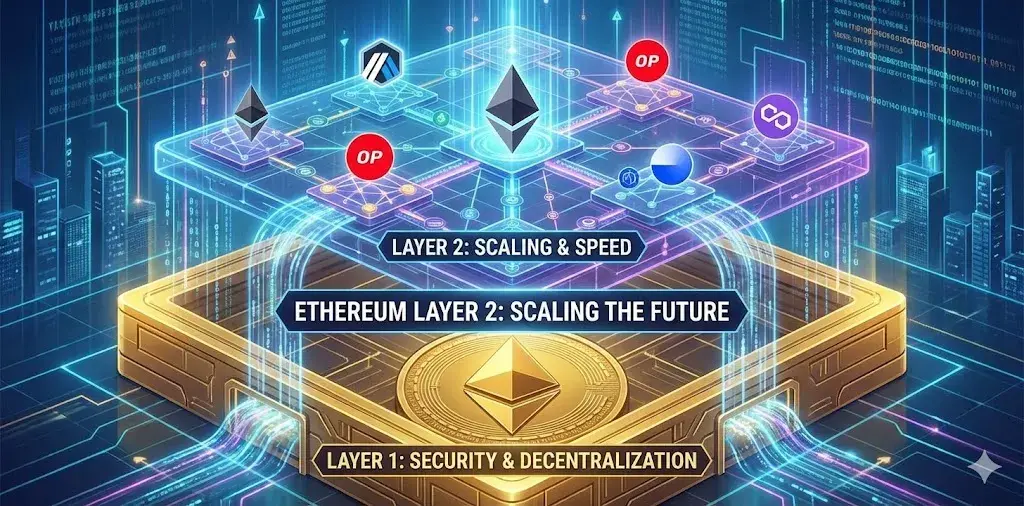
As Ethereum transitions into a settlement layer, ethereum layer 2 networks are seeing record-breaking adoption. This article explores how EIP-4844 and the stabilization of gas fees have paved the way for a new era of scalable decentralized applications.
For years, the “Ethereum experience” was defined by a paradox: a revolutionary platform for decentralized finance (DeFi) that was often too expensive for the average person to use. During periods of high market activity, a simple token swap could cost upwards of $50 in gas fees, pushing retail users toward cheaper, more centralized alternatives.
However, the narrative has fundamentally shifted. Following the successful implementation of the Dencun upgrade and the introduction of “blobs,” the ecosystem has entered a period of unprecedented stability. Today, ethereum layer 2 solutions are no longer just experimental side-projects; they have become the primary stage for global on-chain activity.
Ethereum Market Trends: Navigating Layer-2 Growth, DeFi Evolution, and Institutional Shifts
The Evolution of the Scaling Roadmap
Ethereum’s transition from a monolithic blockchain—where every transaction is processed on the mainnet—to a modular, “rollup-centric” roadmap is one of the most significant engineering feats in the history of crypto. The goal was simple but ambitious: maintain the peerless security and decentralization of Ethereum while offloading the heavy lifting of transaction processing to secondary layers.
This shift toward layer 2 scaling has allowed the main Ethereum network (Layer 1) to act as a secure “settlement layer.” In this model, L1 provides the ultimate source of truth, while L2s handle thousands of transactions per second at a fraction of the cost.
Why Stable Eth Gas Fees Matter
In previous market cycles, eth gas fees were highly volatile, fluctuating wildly based on the popularity of the latest NFT mint or DeFi yield farm. This volatility made it impossible for developers to build user-friendly applications that required frequent interactions.
Since the introduction of EIP-4844, the cost of posting data from a rollup back to the Ethereum mainnet has plummeted. By using “blobs” instead of expensive “calldata,” ethereum layer 2 networks have been able to pass these savings directly to the user. This stability allows for a more predictable economic environment, encouraging long-term development over short-term speculation.
The Mechanics of Growth: Rollups and Blobs
To understand why the current traction is sustainable, we must look at the technology driving it. The dominant technology in the current market is the “Rollup.” Rollups “roll up” hundreds of transactions into a single batch, which is then verified on the Ethereum mainnet.
EIP-4844: The Game Changer for L2 Economics
The Dencun upgrade introduced “Proto-Danksharding,” a technical improvement that created a dedicated space for L2 data on the Ethereum block. Before this, L2s had to compete with regular users for space on the main chain, which kept fees relatively high.
With the introduction of blobs, the throughput of an ethereum layer 2 can increase significantly without burdening the mainnet. This has led to a “race to the bottom” in terms of fees, with networks like Base, Arbitrum, and Optimism often offering transaction costs of less than a cent.
Optimistic vs. ZK-Rollups: A Competitive Landscape
The layer 2 scaling landscape is divided into two primary camps:
- Optimistic Rollups: These assume transactions are valid by default and only run calculations if a “fraud proof” is submitted. Arbitrum and Optimism are the leaders here, boasting the highest Total Value Locked (TVL).
- ZK-Rollups (Zero-Knowledge): These use complex mathematics to prove that a batch of transactions is valid without revealing the underlying data. Networks like ZK-Sync and Starknet are often viewed as the “endgame” for privacy and speed, though they are technically more difficult to implement.
A Competitive Landscape of Rollups
The surge in traction is best evidenced by the sheer number of active networks. No longer is there a single “winner” in the scaling wars. Instead, we are seeing a diverse ecosystem where different networks cater to different niches.
- Arbitrum: Currently the leader in TVL, Arbitrum has become the home of “DeFi 2.0.” Its deep liquidity and robust developer tools make it the go-to for professional traders.
- Optimism & The OP Stack: Rather than just building a single network, Optimism is building a “Superchain.” By allowing others to launch their own ethereum layer 2 using the OP Stack, they are creating a web of interoperable chains.
- Base: Incubated by Coinbase, Base has seen a meteoric rise by onboarding retail users directly from the exchange. Its integration with consumer-facing apps has proven that L2s can be accessible to non-crypto natives.
The Rise of Base and Coinbase’s Influence
The success of Base is a pivotal moment for ethereum layer 2 adoption. By removing the friction of bridging—a process that often confuses new users—Coinbase has created a “walled garden” that still benefits from the decentralization of Ethereum. This model is likely to be mimicked by other major financial institutions looking to enter the on-chain economy.
The Economic Shift: Is Layer 1 Only for the Rich?
A common critique of the current roadmap is that it “cannibalizes” Ethereum’s mainnet. If everyone is moving to an ethereum layer 2, does the L1 token still have value?
The answer lies in the concept of rent. While users may not pay high eth gas fees on L1 anymore, every L2 must still pay the mainnet to secure its data. Furthermore, for massive institutional transfers or high-value “settlements,” the security of Layer 1 remains unmatched. We are witnessing a transition where L1 is the “Digital Vault,” and L2s are the “Digital Payment Apps” that we use daily.
Future Prospects and Risks: The Fragmentation Challenge
Despite the optimism, the path forward isn’t without hurdles. The primary risk facing layer 2 scaling today is “fragmentation.”
Liquidity and User Experience Silos
When liquidity is split across ten different ethereum layer 2 networks, it can lead to a disjointed user experience. Moving funds from Arbitrum to ZK-Sync can still be cumbersome and expensive for a novice. Solving “interop” (interoperability) is the next major milestone for the community. Projects like Polygon’s AggLayer and the Optimism Superchain are working to make these separate networks feel like one cohesive internet of blockchains.
Decentralizing the Sequencer
Most current L2s rely on a “sequencer”—a centralized server that orders transactions. While this allows for high speeds, it creates a single point of failure. The next phase of development for any serious ethereum layer 2 involves “decentralizing the sequencer,” ensuring that no single entity can censor transactions or halt the network.
Stay informed, read the latest crypto news in real time!
Conclusion: The Foundation is Set
The stabilization of fees and the rise of Layer-2 traction represent the “Broadband Moment” for Ethereum. Just as the internet transitioned from slow dial-up to high-speed fiber, Ethereum has moved from a sluggish, expensive platform to a high-speed, affordable global settlement engine.
As layer 2 scaling continues to mature, the focus will shift from “how do we scale?” to “what can we build?” With the technical barriers falling, the stage is set for the next generation of decentralized applications—from social media to global supply chains—to live on-chain.