Gold has served as the ultimate store of value for millennia, but its physical nature—heavy, difficult to transport, and costly to store—has often been a hurdle for the modern, high-speed investor. Enter the era of Real-World Asset (RWA) digitization. Today, a new financial instrument is capturing the attention of institutional giants and retail traders alike: tokenized gold.
As global economic uncertainty rises, the marriage of blockchain technology and precious metals has moved from a niche experiment to a multi-billion-dollar sector. But what exactly is driving this massive influx of capital, and how does it change the way we view “safe-haven” assets?
What Exactly is Tokenized Gold?
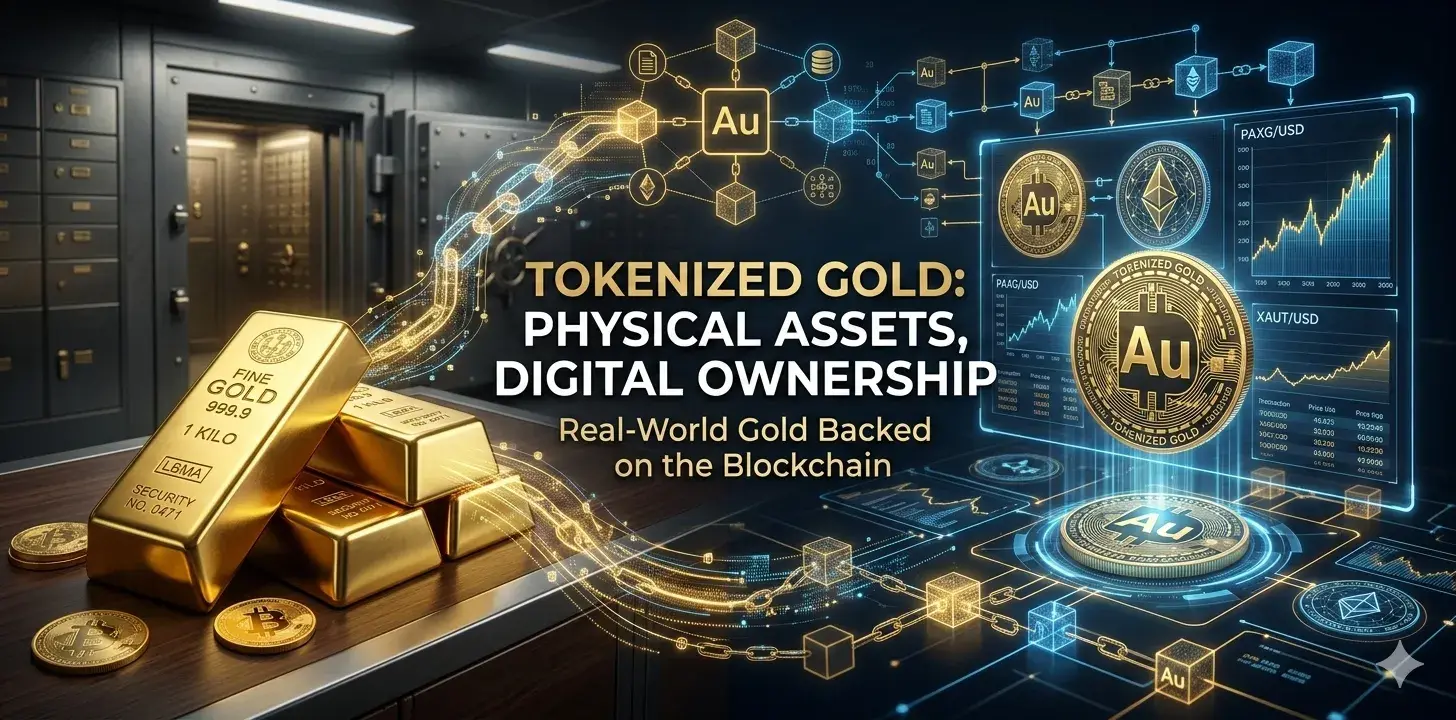
At its core, tokenized gold is a digital representation of physical gold bullion held in secure, audited vaults. Each token represents a specific weight of gold—usually one fine troy ounce—and is issued on a blockchain like Ethereum or Polygon.
Unlike “paper gold” or traditional Gold ETFs (Exchange-Traded Funds), which often represent a claim on a basket of assets or a contractual obligation, these tokens provide direct ownership of specific, identifiable gold bars. By utilizing distributed ledger technology, investors can move their gold with the same ease as sending an email, bypassing the slow and expensive settlement processes of traditional commodity markets.
The Mechanics: From Vault to Blockchain
The process begins with a regulated custodian who stores physical LBMA-compliant gold bars. A minting entity then issues tokens on the blockchain, with each token cryptographically linked to a specific portion of that physical reserve.
This creates a “Proof of Reserve” system. In many cases, holders of tokenized gold can look up the serial number of the specific gold bar tied to their digital assets, providing a level of transparency that was previously impossible for the average investor.
Why Investors are Pouring Billions into Digital Bullion
The market capitalization of gold-backed tokens has surged past the $1 billion mark, with institutional interest signaling that this is just the beginning. The reasons for this migration are rooted in the fundamental efficiencies of blockchain.
1. Instant Liquidity and 24/7 Trading
Traditional gold markets operate on banking hours. If a geopolitical event occurs on a Saturday, a physical gold holder or an ETF investor is stuck until Monday morning. Tokenized assets trade 24/7/365. This allows investors to react to global volatility in real-time, providing a level of liquidity that physical bars cannot match.
2. Fractional Ownership
Buying a standard 400-ounce gold bar is out of reach for most individuals. Even one-ounce coins carry significant premiums over the “spot” price. Tokenization allows for “fractionalization,” meaning an investor can buy $10 or $10,000 worth of gold. This lowers the barrier to entry, democratizing access to high-grade bullion.
3. Elimination of Storage and Insurance Headaches
Storing physical gold at home is risky, and professional vaulting services often charge high recurring fees and require complex paperwork. When holding tokenized gold, the storage and insurance are managed by the issuer, often at a lower cost-ratio than individual storage, with the convenience of digital management.
The Major Players: PAXG and XAUT
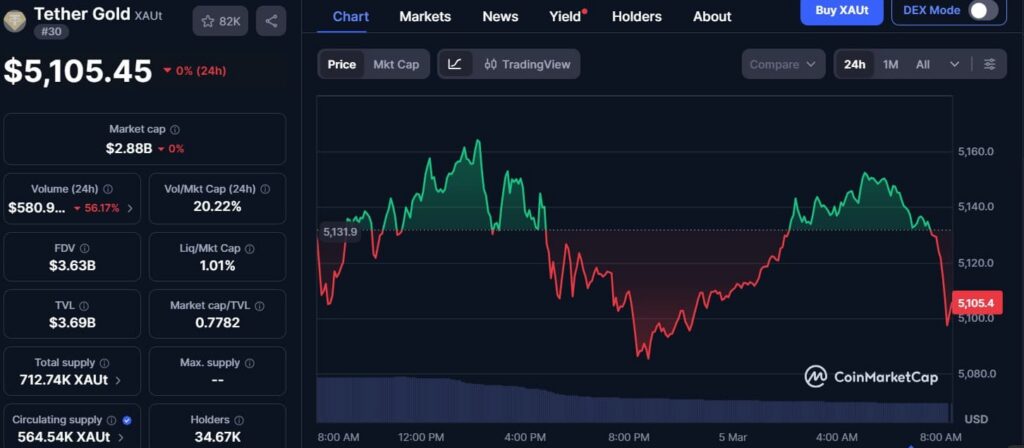
Currently, two dominant assets lead the market. Paxos Gold (PAXG) and Tether Gold (XAUT) account for the vast majority of the sector’s volume.
- PAXG: Issued by the Paxos Trust Company, a regulated entity in New York. Each token is backed by one fine troy ounce of a 400 oz London Good Delivery gold bar, stored in Brink’s vaults.
- XAUT: Offered by the team behind the world’s largest stablecoin (USDT). It provides holders with ownership of physical gold on specific bars, with zero custody fees.
The success of these tokens has proven that investors value the combination of a regulated physical backbone and a decentralized distribution layer.
Expert Perspectives on the Gold-Crypto Merger
Financial analysts are increasingly viewing these assets as the “bridge” between traditional finance (TradFi) and decentralized finance (DeFi).
Marcus Sotiriou, Market Analyst, notes: “The appeal of tokenized gold lies in its utility. You can’t use a physical gold bar as collateral in a lending protocol, but you can use a gold token. This transforms gold from a static asset into a productive one.”
Furthermore, Larry Fink, CEO of BlackRock, has frequently discussed the “tokenization of markets” as the next generation for securities. While BlackRock focuses on many assets, the infrastructure being built for gold is seen by many as the blueprint for all future RWA projects.
Risk Management: What Every Investor Should Know
While the benefits are significant, investing in tokenized gold requires due diligence. Because these assets rely on a bridge between the physical and digital worlds, investors face “counterparty risk.”
- Custody Audits: Always verify if the issuer provides regular, third-party audits of their physical vaults. Transparency is the only way to ensure the tokens aren’t “unbacked.”
- Regulatory Environment: As a relatively new asset class, the regulatory status of these tokens can vary by jurisdiction.
- Smart Contract Risk: Like any blockchain asset, the security of the underlying code is paramount. Stick to well-established protocols with a history of clean security audits.
The Role of Gold in the Web3 Ecosystem
We are entering an era where tokenized gold is becoming a staple of the “inflation-resistant” portfolio. In the DeFi space, these tokens are being used as stable collateral. Instead of using volatile assets like Bitcoin to take out a loan, users are using gold-backed tokens, which offer the stability of the metal with the speed of the blockchain.
This integration suggests that gold is not being replaced by cryptocurrency; rather, it is being upgraded. By stripping away the logistical weight of the metal, blockchain has made gold more “spendable” and “productive” than ever before in its 5,000-year history.
Stay informed, read the latest crypto news in real time!
Conclusion: The Digital Renaissance of an Ancient Asset
The influx of billions into the sector is more than just a trend; it is a structural shift in how the world handles value. By solving the age-old problems of portability, divisibility, and 24/7 access, tokenized gold has positioned itself as a premier asset for the digital age.
Whether you are an institutional treasurer looking for a hedge against currency devaluation or a retail investor wanting to start small, the ability to own audited, physical bullion on your smartphone is a revolutionary step forward. As the technology matures, the “gold standard” may finally return—not in our vaults, but in our digital wallets.

Steven Andros is a crypto enthusiast whose main goal is to tell everyone about the prospects of Web 3.0. His love for cryptocurrencies began in his student years, when he realized the obvious advantages of decentralized money over traditional payments. Email: [email protected]