
TL;DR (Key Points)
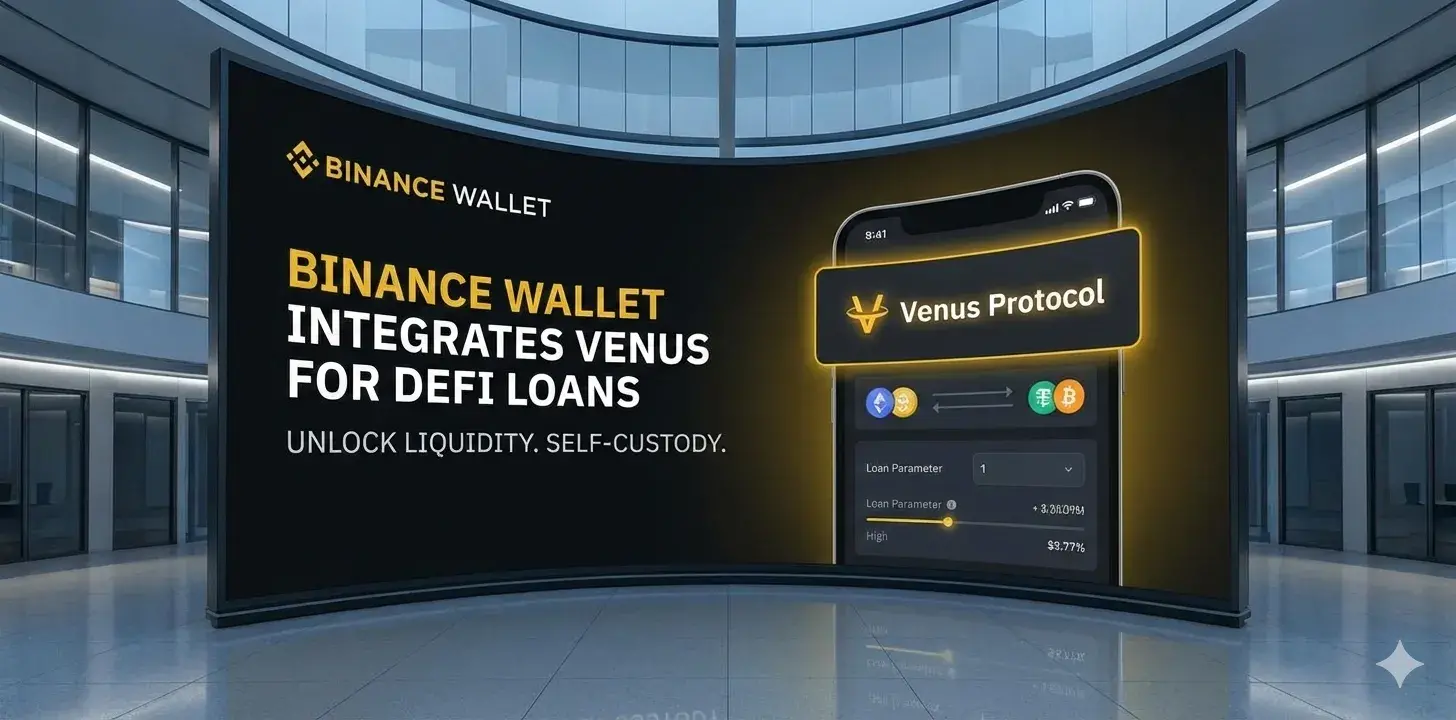
- Direct Web3 Integration: Binance has integrated Venus Protocol directly into the Binance Wallet interface, allowing for seamless decentralized borrowing.
- Self-Custody Focus: Unlike lending on the centralized exchange, this feature allows users to maintain full control of their private keys while accessing liquidity.
- Hodl and Borrow: The primary use case is for users seeking liquidity (usually stablecoins) without having to sell their core long-term crypto holdings.
- Strategic Expansion: This move bridges Binance’s recent aggressive push into centralized, institutional-grade lending with the decentralized Web3 commercial space.
- Incentive Program: To encourage adoption of the new feature, Binance has launched a substantial 400,000 USDT reward pool for eligible borrowers.
In a significant move to bridge the gap between centralized exchange utility and decentralized self-custody, Binance has officially expanded its lending ecosystem into Web3. Through a strategic partnership with Venus Protocol, a leading decentralized money market on the BNB Chain, users can now access DeFi loans directly within the interface of the Binance Wallet.
This development marks a pivotal moment in the evolution of crypto-native financial services. It moves sophisticated borrowing tools away from exclusively centralized platforms and embeds them directly into the tools users rely on for self-sovereign asset management. For CryptoQuorum readers tracking the convergence of CeFi and DeFi, this integration signals a maturing market where user convenience and cryptographic control are no longer mutually exclusive.
Unlocking Liquidity Without the Sell-Off
The primary target audience for this new feature is the “crypto-rich, cash-poor” investor—individuals who hold significant amounts of digital assets they believe will appreciate long-term, but who require immediate liquidity for real-world expenses or other investment opportunities.
Traditionally, accessing cash meant selling those assets, potentially triggering taxable events and losing exposure to future upside. The new Binance Wallet integration changes this dynamic. By utilizing Venus Protocol, users can deposit their idle crypto assets as collateral to borrow against them.
This mechanism allows investors to “hodl” their core positions while unlocking capital efficiency. Because the process occurs within Binance’s self-custody wallet, users gain this liquidity without ever ceding control of their private keys to a centralized intermediary. This is a crucial distinction for DeFi purists and security-conscious investors who prioritize asset sovereignty above all else.
The Strategic Bridge: From CeFi Giants to Web3 Native
This rollout is not an isolated product launch but rather a continuation of a broader strategic objective by Binance to dominate the crypto lending space across all verticals.
The company recently made headlines with an aggressive push into lending on its centralized platform (CeFi). That initiative introduced an institutional-grade loan program designed for high-net-worth clients and corporate entities, offering terms that included up to 4x exposure leverage and, in specific promotional scenarios, zero-interest conditions.
By bringing a loan flow into Web3, Binance is effectively taking the robust financial plumbing developed for institutional players and democratizing it for the decentralized market.
Democratizing Access via Venus Protocol
The choice of Venus Protocol as the integration partner is logical. As one of the largest and most liquid algorithmic money market systems on the BNB Chain, Venus provides the necessary depth to handle significant loan volume reliably.
By integrating Venus, Binance is acknowledging that while their centralized exchange is a powerhouse, the future of finance increasingly involves users interacting directly with on-chain protocols. Instead of fighting this trend, Binance is absorbing it into their ecosystem, ensuring that when a user decides to engage with DeFi loans, they do so through a Binance portal.
How the In-Wallet Lending Works
The integration is designed to be seamless, removing the often-clunky user experience associated with navigating third-party decentralized application (dApp) interfaces.
Instead of having to navigate away from their wallet, connect to the Venus website, approve smart contracts externally, and manage the process across multiple tabs, Binance Wallet users can now handle the entire lifecycle of the loan in one place.
Within the wallet interface, users can select their available assets to supply as collateral to the Venus Protocol. Once supplied, the protocol determines their borrowing capacity based on the asset’s loan-to-value (LTV) ratio. Users can then borrow supported assets (typically stablecoins like USDT or USDC) instantly. Repayments and collateral management are also handled directly through the wallet’s dashboard.
Incentivizing Adoption: The 400,000 USDT Reward Pool
To kickstart liquidity and encourage immediate adoption of this new Web3 functionality, Binance is utilizing a classic crypto growth strategy: direct incentives.
Binance has announced a substantial 400,000 USDT reward pool specifically for eligible borrowers using the new in-wallet feature. While specific eligibility criteria regarding loan sizes or duration would need to be checked on the official announcement, such a large prize pool indicates Binance’s commitment to migrating users toward this new functionality.
This incentive structure serves a dual purpose. Firstly, it rewards early adopters for trying the new system. Secondly, it acts as a stress test for the integration, ensuring the bridge between the wallet and Venus Protocol can handle substantial volume right out of the gate.
Stay informed, read the latest crypto news in real time!
Conclusion: The Blurring Lines of Finance
The integration of Venus Protocol into the Binance Wallet is more than just a new feature; it is evidence of the continued blurring of lines between CeFi and DeFi. Binance is effectively saying that users should not have to choose between the slick user experience of a centralized giant and the self-sovereignty of DeFi protocols.
By offering DeFi loans in a self-custody environment, backed by the liquidity of a major protocol like Venus, Binance is positioning its wallet not just as a storage device, but as a comprehensive financial hub for the Web3 era. As this trend continues, we can expect to see more complex financial products—from staking to derivatives—migrate from centralized order books directly into our personal wallets.

Steven Andros is a crypto enthusiast whose main goal is to tell everyone about the prospects of Web 3.0. His love for cryptocurrencies began in his student years, when he realized the obvious advantages of decentralized money over traditional payments. Email: [email protected]
📩 Subscribe Now
Join thousands of crypto readers who stay ahead of the market. 100% Free. No Spam. Unsubscribe anytime.