

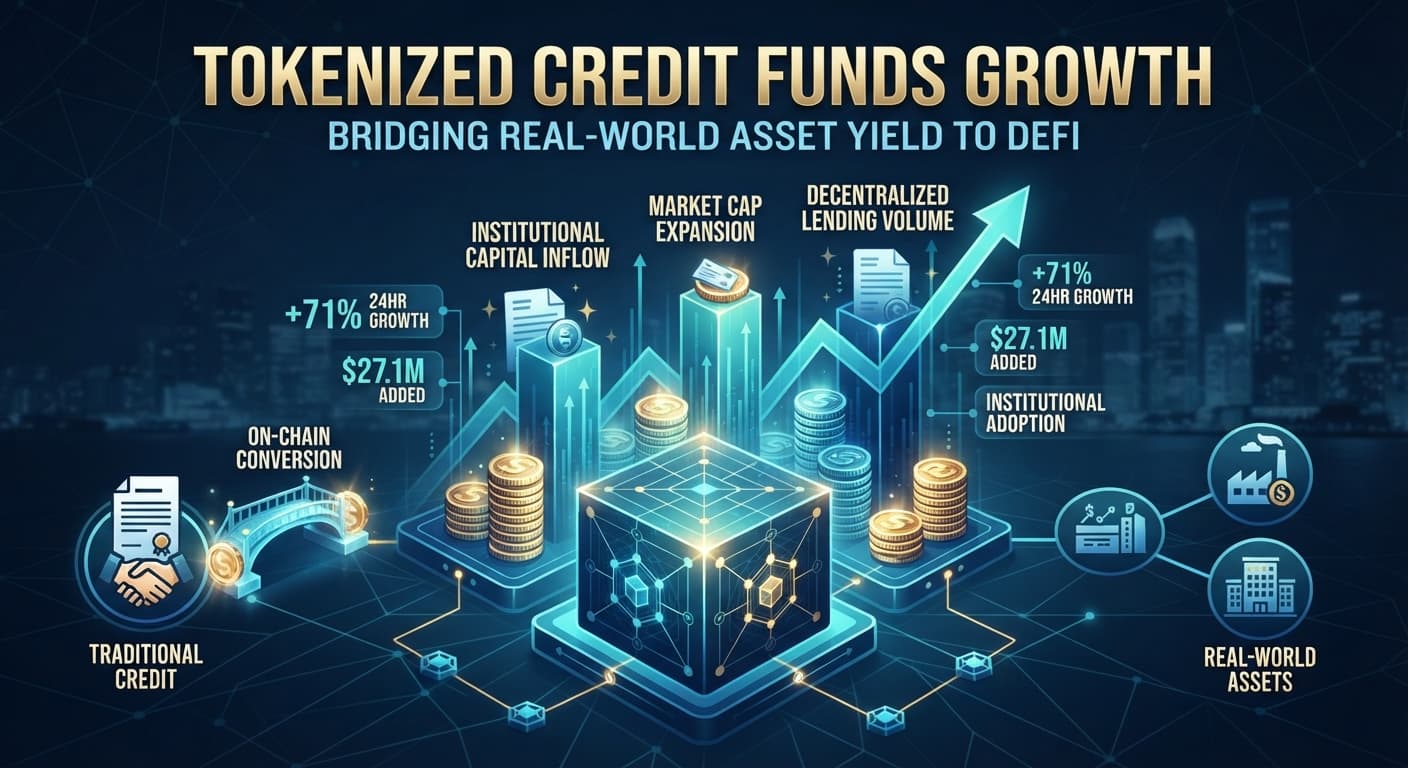
The convergence of traditional finance and blockchain technology is accelerating at an unprecedented pace, with real-world asset (RWA) tokenization emerging as one of the most dynamic sectors in modern finance. Recent network tracking data highlights significant momentum within tokenized credit markets, showcasing how institutional capital is increasingly migrating to transparent, on-chain debt vehicles. Leading this expansion, Maple Finance recently captured approximately 71% of total market cap growth across major tracking issuers within a single 24-hour window, outpacing competitors by significant margins.
This rapid expansion underscores a broader structural shift. As institutional investors search for predictable yields outside of volatile cryptocurrency loops, tokenized private credit and on-chain lending protocols provide a compliant, high-utility alternative. By connecting institutional lenders directly with credit originators through automated smart contracts, platforms are effectively rewriting the rules of global debt capital markets.
| Issuer / Protocol | 24-Hour Growth Share | Market Role & Focus |
| Maple Finance | ~71% (+$27.1M) | Institutional crypto-capital network and loan portfolio scaling |
| HastraFi | Second position | On-chain credit origination and liquidity provision |
| Peer Protocols | Remaining share | Diversified real-world asset yield generation |
The Mechanics of On-Chain Credit Markets
Tokenizing private credit involves converting traditional lending agreements, promissory notes, and corporate debt instruments into blockchain-based tokens. These digital representations allow investors to verify ownership instantly, track interest accruals in real-time, and execute secondary transfers with minimal friction.
Unlike legacy credit markets—which are often bogged down by bureaucratic intermediaries, slow settlement times, and opaque reporting—on-chain credit protocols leverage self-executing smart contracts. This automation enforces underwriting rules, manages collateral pools transparently, and reduces operational overhead for both institutional and individual accredited investors.
 SEC Allows Limited Tokenized NMS Stock Trading→
 Coinbase Sets New Industry Benchmark with Fully-Backed Tokenized Stocks for Global Investors→
 Metric DEX Launches With Chainlink Data Streams→
 Solana’s RWA Ecosystem Surpasses $4 Billion in Total Value, Setting New Milestone for Tokenized Finance→
“The tokenization of private credit represents the most frictionless bridge between institutional liquidity pools and high-yield real-world debt instruments.” — DeFi Infrastructure Analyst
Capital Efficiency and Institutional Participation
The dominance of platforms like Maple Finance demonstrates that market participants favor infrastructure built for scale and institutional compliance. By establishing rigorous borrower vetting, transparent collateral management, and robust regulatory structures, these networks attract multi-million-dollar inflows from sophisticated investors.
Industry experts emphasize that as tokenized credit scales into a multi-billion-dollar asset class, standardizing risk assessment protocols will be paramount. When institutional capital can flow freely across borders with programmatic verification, the cost of capital decreases while market accessibility expands exponentially.
| Traditional Credit Market | Tokenized On-Chain Credit |
| Manual underwriting & slow settlement | Automated smart contract execution |
| Limited transparency and reporting | Real-time on-chain data tracking |
| High intermediary fees and friction | Direct peer-to-peer capital efficiency |
Expert Perspectives on RWA Market Expansion
Financial strategists and blockchain researchers frequently note that real-world asset tokenization is no longer an experimental niche; it is becoming a foundational pillar of institutional finance. Market commentary underscores that credit funds offer a stable anchor for decentralized finance ecosystems, generating organic yields derived from genuine economic activity rather than inflationary token emissions.
Include expert opinions: Analysts point out that as regulatory clarity improves globally, institutional funds will continue to allocate capital toward tokenized debt instruments that combine the transparency of public ledgers with the legal security of traditional contracts.
Conclusion
The impressive 24-hour growth trajectory led by Maple Finance and other major RWA issuers highlights the unstoppable momentum of tokenized credit. By merging the transparency and speed of blockchain infrastructure with established credit markets, the ecosystem is creating a more efficient, accessible financial future. As more institutional capital moves on-chain, tokenized credit funds will continue to set the benchmark for modern asset management.
Disclaimer
Disclaimer: The information provided in this article is for educational and informational purposes only and does not constitute financial, investment, or legal advice. Real-world asset tokenization and decentralized lending protocols involve inherent risks, including smart contract vulnerabilities and credit defaults. Always conduct your own thorough research and consult with a licensed financial professional before engaging with digital asset markets.