

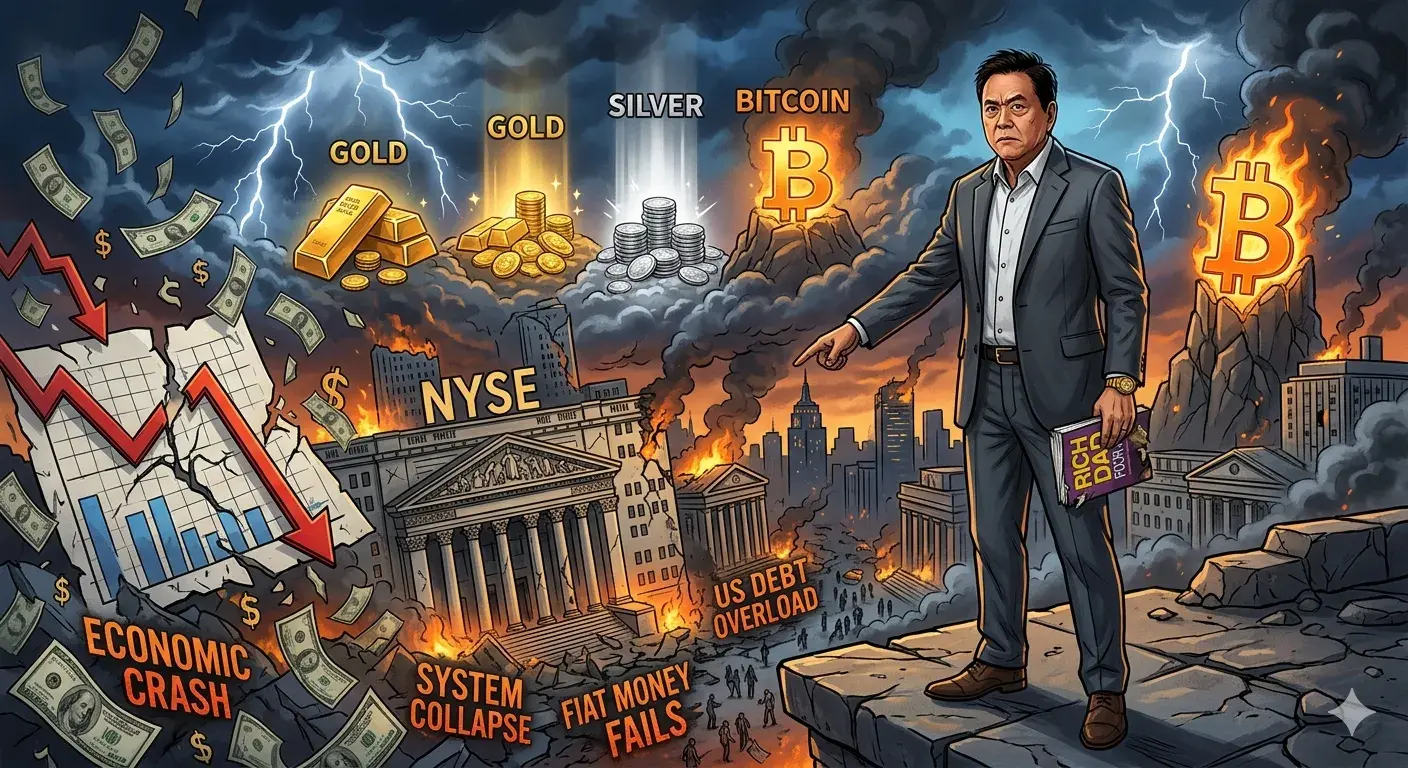
Robert Kiyosaki, the world-renowned author of Rich Dad Poor Dad, has once again sent shockwaves through the financial community. In a recent social media post, Kiyosaki delivered a cryptic and chilling message: “BAD NEWS: History has ARRIVED.”
For followers of his work, this latest Kiyosaki Economic Warning is the culmination of years of predictions regarding a systemic collapse of the traditional financial order. Kiyosaki suggests that we are no longer waiting for a crash—we are living in it.
CRYPTOCAP:TOTAL Real-Time Chart
Decoding “History Has Arrived”
When Kiyosaki states that “history has arrived,” he is likely referencing the cyclical nature of debt-based economies. Economists like Ray Dalio have frequently discussed the “Long-Term Debt Cycle,” which typically lasts 75 to 100 years and ends in a significant restructuring of the global monetary system.
The core of this Kiyosaki Economic Warning lies in the belief that the “printing press” of the Federal Reserve can no longer outrun the interest payments on national debt. For Kiyosaki, history shows that every fiat currency eventually returns to its intrinsic value: zero.
 Congress Demands SEC Answers on Agentic AI Trading: What It Means for Retail Investors→
 Momentum Builds for US Crypto Regulation: Senate Banking Committee Passes Clarity Act→
 Big Blue’s Big Bet: IBM Launches Institutional Wallet for 97 of the Top 100 Banks→
 Jamie Dimon’s Global Pivot: Why the “Experiment” Phase is Over for Crypto→
Rich Dad Poor Dad Publication
1997
Kiyosaki begins warning about the fragility of relying on a “job” and the importance of cash-flowing assets.
2008 Financial Crisis
2008
Kiyosaki gains massive credibility after predicting the subprime mortgage collapse in his previous writings.
The ‘Everything Bubble’ Warning
2021
Kiyosaki warns that stocks, bonds, and real estate are all overvalued due to massive COVID-era stimulus.
‘History Has Arrived’ Tweet
2026
Kiyosaki signals that the transition into a new financial era or collapse has officially begun.
Expert Opinions: Alarmist or Visionary?
The financial world is split on the validity of this latest Kiyosaki Economic Warning. While some see it as mere fear-mongering to sell books and newsletters, others see a logical conclusion to current macroeconomic trends.
The Bear Case: Peter Schiff and Jim Rickards
Peter Schiff, CEO of Euro Pacific Capital, often aligns with Kiyosaki on the fate of the dollar. Schiff argues that the Fed is “trapped” between fighting inflation and preventing a banking collapse. “Kiyosaki is right about the destination, even if people disagree on his timing,” Schiff noted in a recent market update. Jim Rickards, author of Currency Wars, also suggests that the world is moving toward a “multipolar” currency system where the dollar loses its hegemony.
The Nuanced Case: Lyn Alden
Investment strategist Lyn Alden provides a more technical perspective. While she acknowledges the severity of the debt-to-GDP ratio, she views it as a “slow grind” rather than a single explosive event. Alden suggests that while a Kiyosaki Economic Warning carries weight, the transition might look more like “financial repression”—where inflation stays higher than interest rates for a decade—rather than a total societal collapse.
The Institutional Case: Mainstream Analysts
Mainstream analysts from firms like Goldman Sachs or JPMorgan typically view these warnings with skepticism. They point to the U.S. dollar’s continued dominance in global trade and the lack of a viable immediate alternative. However, even these institutions have begun hedging, with many launching Bitcoin ETFs and increasing gold reserves, suggesting they are quietly preparing for the volatility Kiyosaki describes.
The Role of Bitcoin and Hard Assets
Central to any Kiyosaki Economic Warning is the solution: getting out of “fake” assets. Kiyosaki has been a vocal proponent of Bitcoin since it was under $10,000, calling it a hedge against the incompetence of the “three stooges” (The Fed, the Treasury, and Wall Street).
“I love Bitcoin because it has a limited supply. When the Fed prints trillions, they can’t print more Bitcoin. It’s the people’s money.” — Robert Kiyosaki
For investors following the Kiyosaki Economic Warning, the strategy is simple:
- Gold: To preserve wealth over centuries.
- Silver: For its industrial utility and massive upside potential in a green economy.
- Bitcoin: For its portability and decentralized nature.
By diversifying into these areas, Kiyosaki argues that investors can move from being victims of the “Great Reset” to being beneficiaries of it.
Is the “Biggest Crash” Finally Here?
Critics of the Kiyosaki Economic Warning point out that he has predicted “the biggest crash in history” dozens of times over the last decade. However, proponents argue that being early is not the same as being wrong. With regional bank failures, escalating geopolitical tensions, and the BRICS nations seeking a gold-backed currency, the “Bad News” Kiyosaki mentioned feels more tangible than ever before.
Whether history has truly “arrived” or is simply knocking on the door, the current Kiyosaki Economic Warning serves as a reminder to re-evaluate one’s exposure to traditional banking systems and consider the merits of decentralized finance.
Are you prepared for a systemic shift in the markets? Subscribe to the CryptoQuorum newsletter for daily insights on how to protect your portfolio during economic uncertainty.
Disclaimer: The information provided in this article is for educational and informational purposes only and should not be considered financial advice. Always conduct your own research or consult with a qualified financial advisor before making any investment decisions.